
About
Manuals
Oldsmobile Series 60 (Sixty)
 |
|
|
Production period: |
1939 to 1948 |
|
Class : |
Motor Car |
|
Body versions : |
Saloon, station wagon, coupé, convertible |
|
Engines: |
Gasoline :3.5-4.2 liters |
|
Length: |
4801-5182 mm |
|
Wheelbase : |
2921-3023 mm |
|
Curb weight : |
1300-1715 kg |
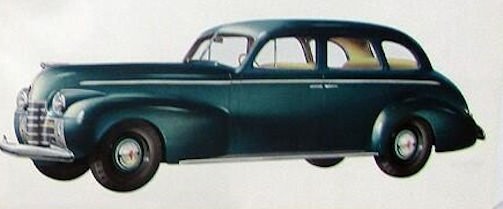
The Oldsmobile series 60 (Sixty) , also known as its predecessor, the Oldsmobile F-Series , was a mid-range car built by Oldsmobile, a brand of General Motors from 1939 to 1948. This was as the entry-level model of the brand.
History
In the first year of production, the 60 had an inline six-cylinder engine with 3523 cc displacement, which made 90 bhp (67.1 kW) at 3400rpm . Compared to the predecessor, the waistline was a bit lower and the front fenders elegantly curved. In addition to the main grille under the bonnet of the Oldsmobile wore now 60 small side grills under the headlights. It was available as a two or four-door hatchback with five seats or as a two-door club or business coupe with three seats. The Oldsmobile 60 was also manufactured by General Motors-Holden's in Australia from 1946 to 1948 , where it was sold as Oldsmobile Ace . The cars were fitted with Australian bodies and differed completely from the Oldsmobile 60 from American production. They were the last GM models with rear-hinged doors .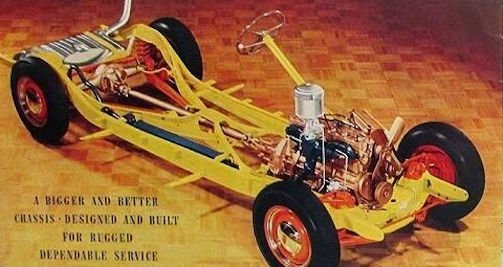
The following year they dropped the name F-series and gave the sixty this special name . Oldsmobile F39 Sixty was new introduction in the low-price field. Other series: Seventy and Eighty. Production 1939 F-39 Series 60 coupe 2 Passenger 5,575 club coupe 2,273 sedan 2-door 16,910 and sedan 4-door 15.958 produced.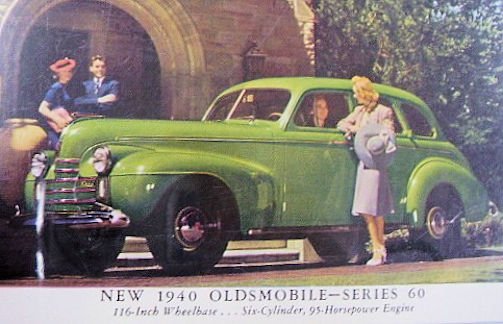
For 1940 models Hydra-Matic was now first offered as optional extra , this, was clutch-free. It combined a torque converter with a fluid coupling. It was the first gearbox that used this. Now fitted with the larger 3769 cc Series engine and 95 bhp (70.8 kW) power. The under body were 9 "(225 mm) longer than its predecessor and were a bit rounder. As to the bodies mentioned above, there was now also a 2-door convertible and a 5-door station wagon added to the range.
In 1941, the cars increased in size and like the 70, they came with an even larger engine with 3900 cc and 100 bhp (74.6 kW). In these larger cars the eight-cylinder engine from the model 90 with 4211 cc displacement and 110 bhp (82 kW) power at 3400rpm A new Town Sedan was added to the 60 series. In 1942 came a notchback sedan with 4 doors and horizontal chrome radiator grille . The models were, depending on the engine equipment, called now the more well known "66" or "68" the cheapest 66 coupe cost $915. On February 5, 1942, production was discontinued due to the American involvement in the second world war During the war, Oldsmobile manufactured 350,000 aircraft engines and many gun parts for the war effort.
Post War in 1946, the pre-war series 60 was reissued, however, initially only with the six-cylinder engine as a two- and four-door hatchback, four-door notchback sedan, two-door convertible and five-door station wagon. Like many post war cars worldwide only small changes made the grille had changed and consisted of four horizontal chrome bars, which were led down below the integrated into the fender’s headlight to the bumper. Rear and front bumpers had been pulled around the corners of the vehicle to the wheel cutouts. Also, the nickname Special was used again.
From 1947 there were again on request the well-known eight-cylinder engine and a convertible and a station wagon were also available. The two-door sedan was replaced by a similar coupe. In 1948, the last year of production, there were few changes. Only the epithet Special was replaced by Dynamic , as in the 70's .
The following year, the 76 replaced the 60 as an entry-level model.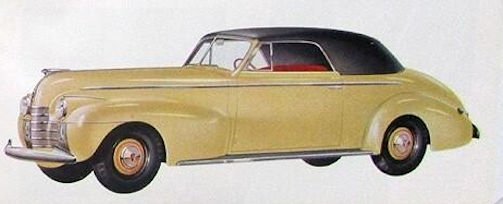
|
Featured
|
|

